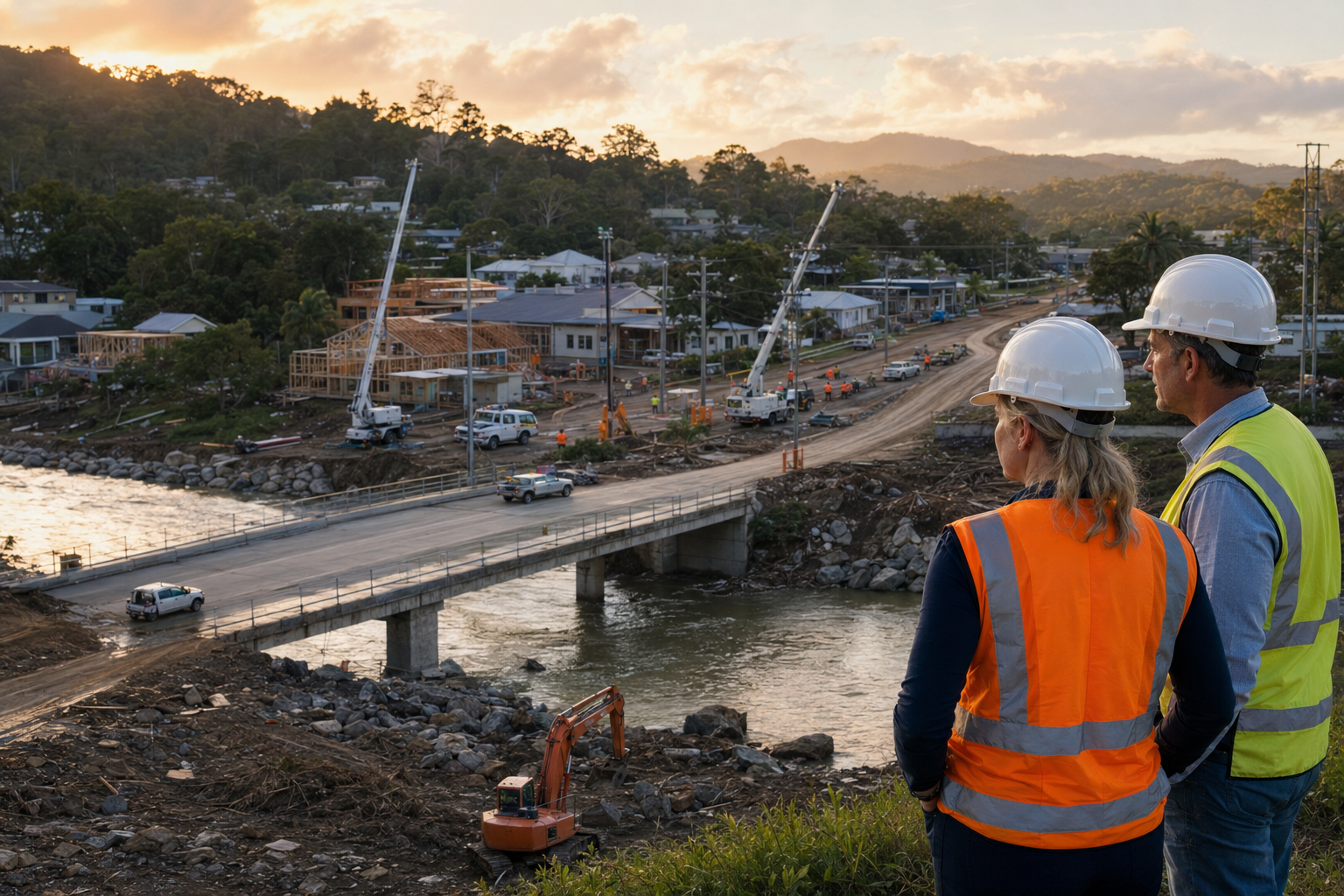
Recovery, Reconstruction & Resilience

From Disruption to Recovery. From Recovery to Resilience.

Integrated Recovery for Stronger Futures


We strengthen recovery coordination and reconstruction delivery by helping governments, insurers, asset owners and communities respond to disaster, restore affected environments and rebuild for future resilience.

Tacmin operates across the full recovery pathway, from damage assessment and stabilisation through recovery planning, specialist mobilisation and reconstruction delivery to longer-term resilience, bringing fragmented activities into one coordinated programme.

Where organisations engage us

Applied following natural disasters, infrastructure failures, industrial incidents, environmental events and major insured losses where affected communities, enterprises and assets require coordinated stabilisation, recovery and reconstruction.

We are typically engaged

  • Floods, storms, cyclones or fires cause damage
  • Infrastructure or essential services fail
  • Industrial, mining or tailings incidents occur
  • Environmental contamination requires remediation
  • Property or insured losses require reinstatement
  • Recovery parties require coordination

We strengthen opportunities so that

  • Recovery priorities become clear
  • Affected environments are stabilised
  • Stakeholders become aligned
  • Specialists are mobilised
  • Reconstruction is coordinated
  • Essential functions are restored

Typical Recovery & Reconstruction Engagements

Recovery, Reconstruction & Resilience is typically applied where disaster, damage or major disruption has affected communities, enterprises, buildings, infrastructure or industrial assets and the recovery effort requires integrated leadership and disciplined delivery.
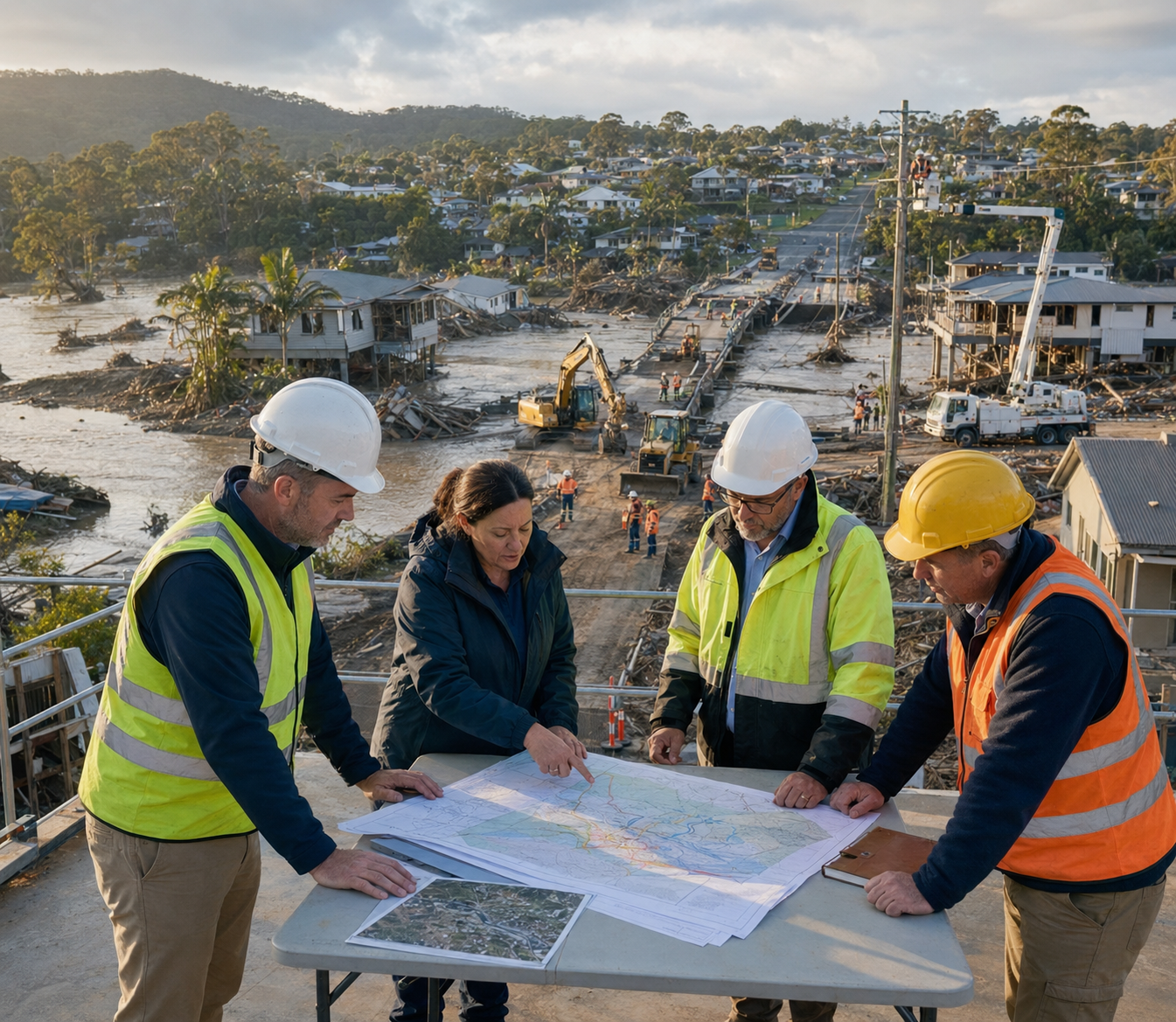
Recovery and reconstruction may be applied where clients are:

  • Assessing disaster damage and recovery requirements
  • Coordinating emergency safety, access and stabilisation
  • Defining recovery priorities, scopes and delivery pathways
  • Aligning governments, insurers, owners and stakeholders
  • Mobilising engineers, contractors, suppliers and specialists
  • Managing demolition, clearance, cleaning and remediation
  • Reconstructing buildings, infrastructure and essential services
  • Restoring industrial facilities and operating capability
  • Strengthening assets against future disruption
  • Coordinating community or regional recovery programmes

The objective is not simply to repair individual assets, but to establish an integrated recovery pathway connecting immediate stabilisation, coordinated reconstruction and future resilience under one recovery programme.

What changes when we are involved

  • Recovery priorities become clearer
  • Stakeholder responsibilities become better aligned
  • Specialist resources are coordinated more effectively
  • Procurement and delivery pathways strengthen
  • Cost, programme and progress visibility improves
  • Essential functions are restored systematically
  • Rebuilt assets and communities become more resilient

How the architecture operates

Recovery, Reconstruction & Resilience is applied through an integrated delivery architecture that helps organisations assess and stabilise affected environments, coordinate recovery and reconstruction, and rebuild assets and infrastructure for stronger future resilience.

Assess & Stabilise


Assess damage, coordinate safety requirements, stabilise affected environments and establish the immediate works and recovery priorities required to move forward.

Recover & Reconstruct


Coordinate recovery planning, engineering, procurement, specialist contractors, cost control and reconstruction delivery through one integrated recovery programme.

Rebuild for Resilience


Strengthen alignment across owners, investors, partners and stakeholders so commitments are supported by a shared understanding of the opportunity.